Operations Suite

Unlocking Operational Excellence. The Active Queue-Shaping and Dynamic Optimization Engine

The Operational Thesis

The Paradigm Shift (Legacy vs. LARES)

Traditional site operations treat scheduling as a passive calendar exercise. Logistics yards, contractor check-ins, and daily labor flows are managed with fragmented spreadsheets, isolated booking portals, or manual lists. This passive stance leads to costly, unpredictable gate delays, wasted labor, and a general inability to align site traffic with strategic business needs.

At Lowis Tech, we reject this passive approach. Operational excellence is not achieved by observing bottlenecks—it is achieved by systematically eliminating the conditions that allow them to occur.
Digital-Elements-Options

The LARES Operations Suite transforms site management into an active, intelligent queue-shaping engine. By dynamically aligning incoming traffic, processing capacities, and multi-tenant constraints, the platform eliminates operational loss. Whether controlling high-volume bulk cargo at a terminal, balancing truck flows at a busy warehouse, or coordinating on-site service providers, LARES converts physical queues into streamlined, predictable, and optimized operational workflows.

Architectural Integration (Our DNA)

Event-Driven Edge Intelligence

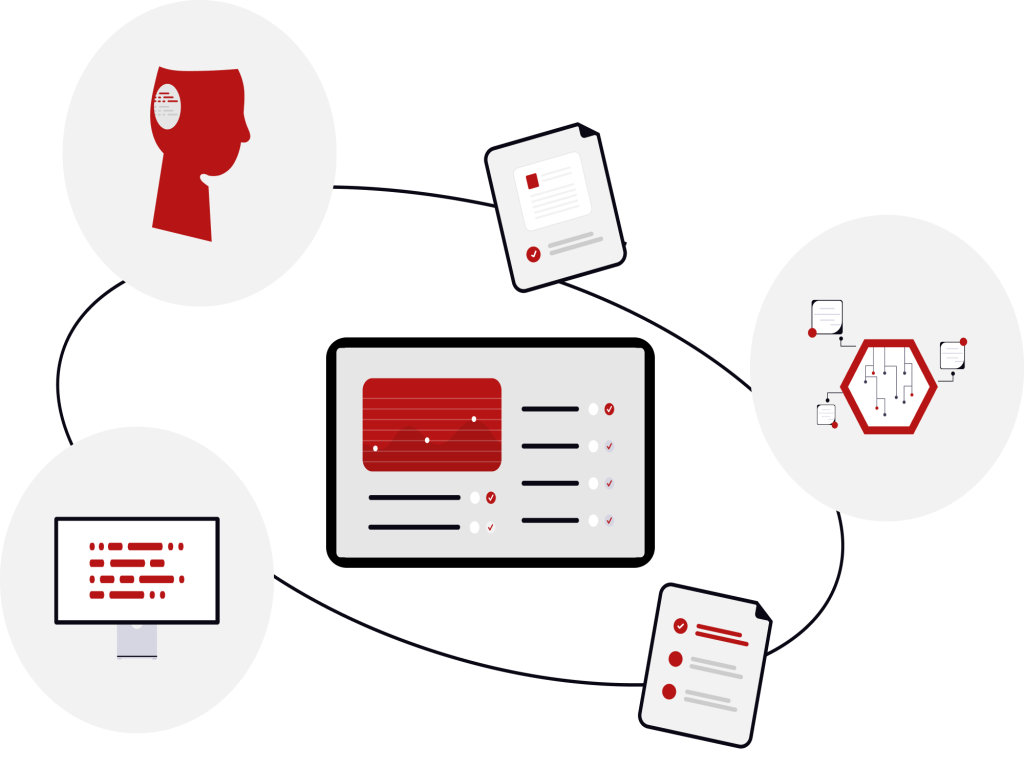
The LARES backend is built on a pure, highly scalable cloud foundation—deployable on secure public clouds, private corporate clouds, or dedicated sovereign data centers. We integrate at the software layer, connecting with external ERPs, WMS, TMS and other business platforms as well as with other apps in our ecosystem.

Every action inside our applications—and every background function—outputs a standardized JSON event. This continuous, real-time stream of clean activity events creates a fully auditable digital trail of your entire physical operation, allowing the system to instantly trigger automated workflows and alerts across platforms.

Data-Centric "Minutes" Engine

We measure on-site resource capacity down to the exact minute. Each timeslot on a dock or service point contains precisely 60 available minutes. When an operation is booked, the system consumes those minutes based on the specific cargo or task profile (e.g., a quick unloading task consumes 5 minutes).

Furthermore, our data-centric architecture empowers users to define custom data points (such as weather conditions, warehouse available capacity or even 2nd party and 3rd party data from external sources) and append them directly to these events, providing deep context to detect fraud, prevent anomalies, and perform advanced operational analysis.

AI-Powered Readiness

Our development philosophy recognizes a fundamental truth: Artificial Intelligence is only as powerful as the data context it receives. Most legacy enterprise systems require extensive, costly data-cleaning pipelines to be intelligible to AI models.

Because the LARES DNA is natively event-driven and data-centric, every transaction and state change is captured as highly structured, contextualized data from day one. Our systems are built to serve as clean, ready-to-use information streams, ensuring that your operational footprint is natively primed for AI integration and automated reasoning without requiring complex software re-engineering.

The Ecosystem

The Central Core & Edge Layer

Our central operational brain. It allows facility managers to configure advanced time-slot allocations, manage dock resources, and automate bookings. By deploying intelligent rules—such as Routing (specific partners to specific docks) and Limitations (capping daily intakes per supplier/product)—it actively shapes the incoming queue to prevent congestion and maximize total annual throughput.

A dedicated, high-visibility television dashboard designed to be displayed directly on-site in the warehouse or terminal area. It projects real-time, chronological “what’s next” queues, allowing the physical workforce to coordinate loading operations instantly and maintain queue speed without relying on fragile handheld devices.

Predictive Scenario Simulators

An advanced simulative sandboxing application designed for highly complex, high-velocity logistics corridors, multi modal terminals, multi-tenant industrial parks, and large-scale commercial hubs. QSim empowers operators to model physical gate layouts and test “what-if” scenarios in real time. It quantitatively verifies how site infrastructure will cope with sudden traffic spikes, gate closures, or detours, allowing businesses to proactively protect their throughput and plan for specific scenarios.

The Roadmap

The Objective: Expanding deep-level integration with artificial intelligence models.

The Execution: We are actively building native Model Context Protocol (MCP) server support into the LARES ecosystem. Because our platform is fundamentally data-centric and structured to capture rich context at every step, we are uniquely aligned with the core philosophy of MCP. Instead of forcing external systems to navigate rigid, traditional API endpoints, our native MCP servers will securely expose live access schemas and context-rich event histories directly to external Large Language Models (LLMs). This allows technologically mature companies to instantly connect their own AI infrastructure to our ecosystem, enabling external LLMs to interact with, query, and leverage our operational data for any custom corporate purpose without writing a single line of code.

The Objective: Streamlining third-party contractor compliance and inbound transport logistics.

The Execution: We are currently developing two major expansions, estimated for deployment for 2027:

LARES CMoS (Contractor Management on Site): Expanding our operational logic to manage external service teams (cleaning, maintenance, catering). CMoS enforces absolute compliance with safety certifications, job durations, and restricted zones, automatically generating encrypted access vouchers directly in the Access Suite.

LARES Transporter App: A dedicated mobile application for drivers that integrates into the Yard ecosystem, allowing them to manage bookings, upload photographs of seals and cargo states, and capture electronic signatures.

LARES WAM (Working Area Management): Using the Access Suite’s physical logs as an active input for project forecasting. By mapping milestones and estimated hours (e.g., a 10,000-hour manufacturing task) to physical zones, WAM tracks actual durations as workers check in and out, flagging productivity deficits before deadlines are breached.

The Objective: Proactive labor productivity and milestone forecasting.

The Execution: Our long-term vision centers on LARES CMoS (Contractors Management on Site) and WAM (Working Area Management). WAM uses the Access Suite’s logs as an active input for labor productivity forecasting combining your own workforce with contractors. By mapping specific job profiles and estimated durations (such as a 10,000-hour manufacturing project) to designated on-site physical zones, WAM tracks actual active hours as workers check in and out. The system automatically compares live data against operational milestones, proactively flagging delays to help management address productivity issues before deadlines are missed.

Benchmark-Optimization

Alliances & Partnerships

Commercial Partnerships

We partner with logistics consultancies, supply chain advisors, and enterprise system integrators who require a modern, high-performance software layer to replace traditional, static scheduling calendars. We provide extensive technical certifications, clear commission structures, and deployment guides to ensure mutual success.

Technology Partnerships

The LARES Operations Suite sits securely at the center of existing technology stacks. We build and maintain robust, native API endpoints to ensure seamless integrations with leading enterprise platforms. To protect the system stability of our technology partners, we enforce a strict 3 months notice policy before any core API updates go live, guaranteeing a perfectly stable and predictable operational landscape.