
Real Estate and Commercial Suite

The Digital Twin of Urban Dynamics. Turning Physical Spaces into Actionable Intelligence.

The Operational Thesis

The Paradigm Shift (Static Real Estate vs. LARES REI)

For decades, real estate decisions—whether buying a home, leasing a retail storefront, or approving a municipal building permit—have relied on incomplete, static, and highly subjective data. Retailers understand their online conversion rates but operate in a “dark zone” on the physical street. Homebuyers evaluate square meters but remain blind to a building’s hidden structural risks or financial HOA liabilities. Cities plan infrastructure using outdated census reports rather than live urban signals.

At Lowis Tech, we treat the physical built environment as a dynamic, measurable intelligence layer.

Digital-Elements-Building-Data-Search

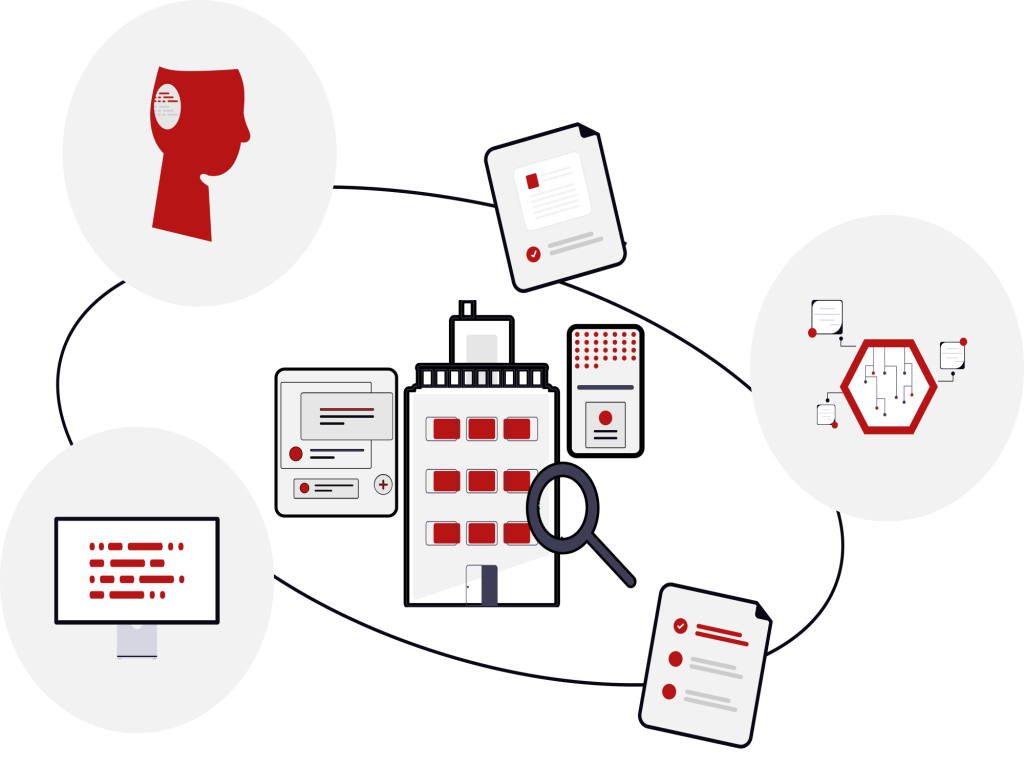
LARES REI (Real Estate Intelligence) bridges the gap between physical spaces and data-driven decision-making. By synthesizing Computer Vision at the edge, accounting telemetry, transit graph theory, and spatial interpolation, LARES REI quantifies the true quality, risk, and commercial value of real estate across three distinct markets: Consumers (B2C), Enterprises (B2B), and Municipalities (B2G).

Architectural Integration (Our DNA)

Event-Driven Edge Processing & Privacy-by-Design

Whether processing physical storefront footfall via on-device camera SoCs or logging building access events through our smart intercoms, our architecture enforces a strict “Privacy-by-Design” model. Video feeds and personal interactions are never streamed or stored in the cloud. Instead, local edge hardware converts physical movements into lightweight, anonymized JSON metadata logs (e.g., timestamps, aggregate gaze duration, demographic brackets). Every physical interaction outputs a standardized event that enriches our central intelligence database without capturing personally identifiable information (PII).

Data-Centric Index Normalization

Raw data is useless without context. LARES REI takes fragmented urban inputs—such as transit schedules, municipal seismic risk records, Google place types, and accounting ledgers—and normalizes them into standardized 0-100 mathematical benchmarks. By appending environmental parameters (such as live weather or municipal events) to structural, financial, and transit data, we transform isolated metrics into a context-rich, multi-dimensional view of real estate health.

AI-Powered "Talk-to-Your-Data" Engine

Because our indexes and storefront analytics are natively structured as clean, contextualized data pipelines, they provide the ideal foundation for artificial intelligence. Beyond standard diagnostic reports, our platform features a natural-language AI Interrogator powered by a token economy. Property managers, retail executives, and urban planners can query live datasets directly—asking complex questions like “How did local road closures affect footfall conversion for my retail storefronts this weekend?” or “Which residential assets present the highest HOA liquidity risk?”—getting immediate, actionable answers without custom SQL engineering.

The Ecosystem

Scope: Plug-and-play storefront intelligence for physical retail.

Architecture: Decoupled, DIY-ready setup running directly on camera SoCs or local edge servers. Measures total street traffic, window gaze duration, entry rates, and sales conversion while integrating weather and local marketing catalysts to explain performance fluctuations.

Scope: Standardized mathematical scoring for residential and commercial assets.

The Index Engine:

Building Quality Index (BQI): Evaluates structural seismic safety, building age, vertical lift access, social density and unit mix uniformity. Aggregates up to Neighborhood (NQI) and City (CQI) levels.

Public Transport Connectivity Index (PTC): Hierarchical graph model evaluating doorstep walkability, route density, network power reach, and 24-hour service reliability (peak vs. off-peak 5-1-1 rule).

Convenience Index (CNV): Significance-first lifestyle scoring based on Google Place Types, prioritizing regional anchor destinations (shopping malls, hospitals) over raw kiosk density.

Home Owner Association Index (HOA): Exclusive financial health analytics powered by accounting data. Separates monthly cash flow discipline (payment latency) from accumulated debt stock (resident/supplier toxicity) and operational survival buffers (liquidity oxygen).

Health & Air Quality Interpolation: Localized spatial model delivering building-specific air quality scores without heavy hardware overhead.

The Objective: Transitioning from reactive municipal management to proactive, data-backed urban governance.

The Execution: LARES REI provides city halls with a dynamic “Digital Twin” of urban health. Municipalities monitor district-level Neighborhood Quality Indexes (NQI) and City Quality Indexes (CQI) to deploy public infrastructure where it is needed most. Through our B2B2G Permit Negotiation Loop, developers run simulations in our sandbox to optimize projects for local transport and health standards, submitting certified impact reports to city halls for accelerated, data-verified building permits.

The Roadmap

The Objective: Capturing the physical “building pulse” at the residential threshold.

The Execution: We are engineering the Building Traffic Index (BTI), powered by our upcoming 10-inch smart intercoms. By measuring anonymized building check-ins and check-outs aggregated into hourly buckets, BTI enriches property data with contextual parameters—such as weather conditions, user categories (tenants, visitors, service providers), and demographic brackets. This provides businesses with hyper-local operational insights (e.g., enabling local restaurants or services to identify exact remote-work density in surrounding buildings and optimize localized offerings and campaigns).

The Objective: Monetizing the residential threshold through a privacy-first ads ecosystem.

The Execution: We are developing an integrated advertising marketplace built around our 10-inch smart intercom screens and tenant mobile apps. Acting strictly as the Technology & Intermediary Layer, we connect Advertisers seeking targeted exposure with Media Capital Partners who own the screen assets. Unlike traditional DOOH networks that lack demographic tracking, and web ads hindered by cookie depreciation, our platform combines digital-grade targeting and attribution with DOOH pricing—delivering hyper-relevant residential ads at minimal operational cost across billions of annual impressions.

The Objective: Establishing REI OS as the standard simulation layer for smart cities.

The Execution: Our long-term vision scales REI into an interactive simulation sandbox for urban developers and city planning departments. By allowing developers to model the exact impact of a proposed high-rise on local transit (PTC), neighborhood traffic, and air quality before breaking ground, LARES REI will serve as the mandatory, data-backed certification bridge between private real estate capital and municipal approval bodies.

Building-Checklist

Alliances & Partnerships

Commercial Partnerships (Referrals, Resellers, & Certified Integrators)

We partner with real estate platforms, brokerage networks, and retail brands looking to integrate certified building quality, transit, and storefront analytics directly into their operational portals. We offer flexible credit-based API access and white-label report integration.

Media Infrastructure & DOOH Capital Partners (Ad Real Estate Investors & Publishers)

Deploying a wide-scale residential screen network requires dedicated hardware capital. We partner with DOOH network operators, media asset funds, and real estate investors looking to acquire and deploy high-yield advertising “real estate.” As the technology intermediary, Lowis Tech provides the operating software, AI demographic telemetry, and marketplace demand—allowing capital partners to monetize residential thresholds with exceptional ROI and ultra-low ongoing operational costs.

Municipal & Enterprise Partnerships (Developers, Banks & City Halls

Through our REI OS Institutional Tier, we provide developers, financial auditors, and municipal planning departments with full access to custom weighting labs, city-wide simulation sandboxes, and dedicated data science support.